International Trade Terms Explained
Incoterms, short for International Commercial Terms, are a set of globally recognised rules that define the responsibilities of sellers and buyers in international trade transactions.
Developed by the International Chamber of Commerce (ICC), Incoterms help prevent confusion by clarifying who is responsible for tasks such as shipping, insurance, documentation, and customs clearance.

Benefits of using Incoterms
Incoterms do not determine ownership or the transfer of title of goods; therefore, they should be used alongside a sales agreement or other methods of transacting the sale or purchase of goods.
This guide provides an overview of the different Incoterms, their applications, and how they can benefit your business.
- Clarity and Precision: Incoterms provide clear definitions of responsibilities, reducing the risk of misunderstandings and disputes between buyers and sellers.
- Global Standardisation: As a globally recognised set of rules, Incoterms facilitate international trade by providing a common language for traders worldwide.
- Risk Management: By clearly defining who is responsible for each aspect of the transaction, Incoterms help manage and mitigate risks associated with international trade.
- Cost Efficiency: Incoterms help optimise costs by specifying who bears the expenses for shipping, insurance, and customs clearance, allowing for better financial planning.
Who’s in charge - and who’s at risk?
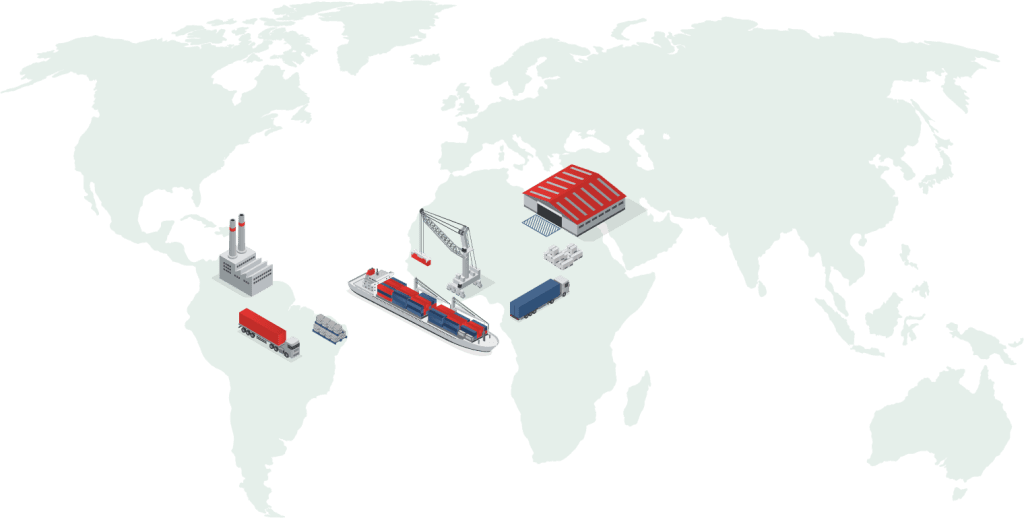
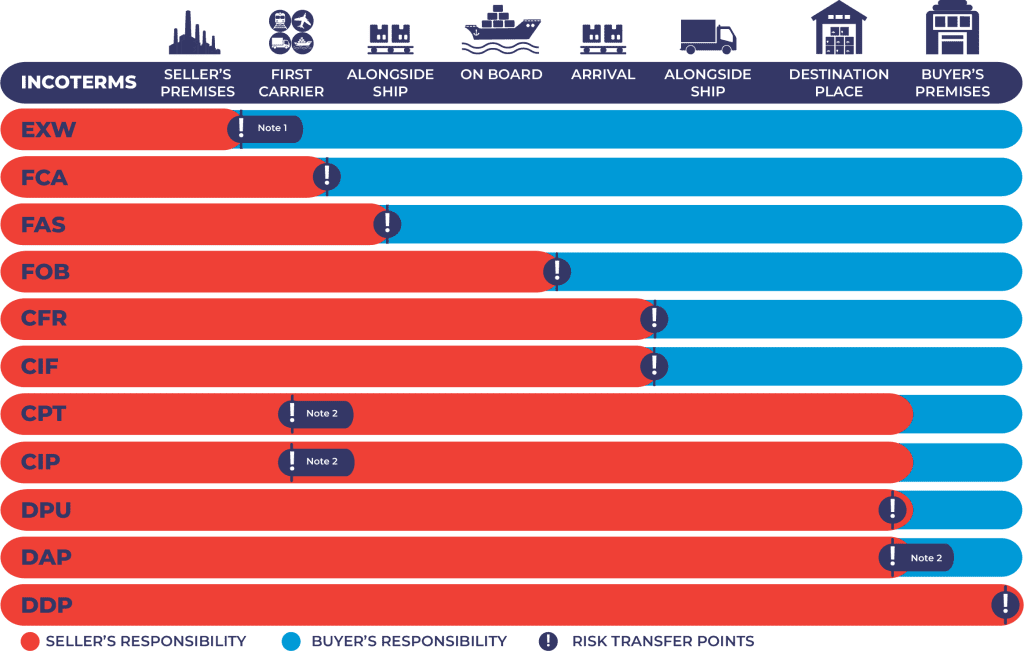
As goods move through eight stages of transport, Incoterms answer:
- Who arranges the transport?
- Who is liable if something goes wrong?
NOTES
- This term is not generally recommended, as the seller is not responsible for loading the goods onto a vehicle or providing documentation for customs clearance. They also have no obligation to act as the exporter on customs or shipping documents. While some sellers may assist, to avoid risk it’s better to use FCA (Seller’s Premises), which offers clearer responsibilities.
- These terms define the minimum obligations of the seller, but additional costs may be incurred depending on the exact location specified. For example, CPT Singapore port and DAP Singapore city limits would involve different responsibilities and cost allocations between the seller and buyer.
Incoterm definitions
For use in all transport modes
EXW
Ex Works
The seller makes the goods available at their premises. The buyer is responsible for all transportation costs and risks from the seller’s location to the final destinations.
FCA
Free Carrier
The seller delivers the goods to a carrier or another party nominated by the buyer at the seller’s premises or another named place. The buyer assumes responsibility for transportation costs and risks from that point.
CPT
Carriage Paid To
The seller pays for the transportation of goods to a named destination. The risk transfers to the buyer once the goods are handed over to the first carrier.
CIP
Carriage and Insurance Paid To
Similar to CPT, but the seller also pays for insurance to cover the buyer’s risk during transportation to the named destination.
DAP
Delivered At Place
The seller is responsible for delivering the goods to a named place, excluding import clearance. The buyer assumes all risks and costs from that point.
DPU
Delivered at Place Unloaded
The seller delivers the goods to a named place and unloads them. The buyer is responsible for import clearance and any further transportation.
DDP
Delivered Duty Paid
The seller is responsible for delivering the goods to a named place, including import clearance and payment of all duties and taxes. The buyer assumes responsibility only after delivery.
Only used for shipments by sea
FAS
Free Alongside Ship
The seller delivers the goods alongside the ship at the named port of shipment. The buyer assumes all costs and risks from that point.
FOB
Free On Board
The seller delivers the goods on board the ship at the named port of shipment. The buyer assumes all costs and risks from that point.
CFR
Cost and Freight
The seller pays for transportation to the named port of destination. The risk transfers to the buyer once the goods are on board the ship.
CIF
Cost, Insurance and Freight
Similar to CFR, but the seller also pays for insurance to cover the buyer’s risk during transportation to the named port of destination.
Frequently asked questions
Incoterms are a set of 11 internationally recognised rules that define the responsibilities of sellers and buyers in international trade transactions. They specify who is responsible for paying for and managing the shipment, insurance, documentation, customs clearance, and other logistical activities.
Incoterms are important because they provide a universal set of rules and guidelines that help facilitate trade by clearly defining the tasks, costs, and risks to be borne by buyers and sellers. This helps ensure smoother transactions and avoids potentially costly misunderstandings.
The Incoterms are divided into two categories: those applicable to any mode of transport and those applicable to sea and inland waterway transport. The seven Incoterms for any mode of transport are EXW (Ex Works), FCA (Free Carrier), CPT (Carriage Paid To), CIP (Carriage and Insurance Paid To), DAP (Delivered at Place), DPU (Delivered at Place Unloaded), and DDP (Delivered Duty Paid). The four Incoterms for sea and inland waterway transport are FAS (Free Alongside Ship), FOB (Free on Board), CFR (Cost and Freight), and CIF (Cost Insurance and Freight).
Choosing the right Incoterm depends on various factors, including the type of goods being shipped, the mode of transport, the destination, and the level of responsibility you want to assume. It’s important to understand the implications of each Incoterm and select the one that best suits your needs.
Yes, you can use older versions of Incoterms if all parties to the transaction agree and clearly specify the chosen version in the contract. The ICC recommends using the latest version, Incoterms 2020, but previous versions like Incoterms 2010 are still valid.